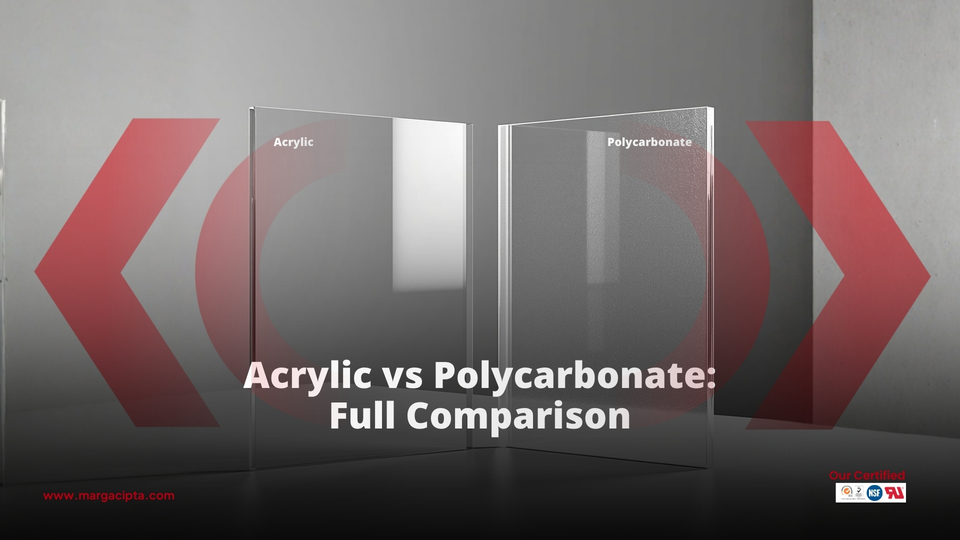
When choosing the right plastic material for your project, the debate between acrylic vs polycarbonate often comes up.
Both materials are widely used in industries such as construction, signage, and manufacturing, but they have distinct characteristics that make them suitable for different applications.
Acrylic Versus Polycarbonate
Understanding their differences can help you make a more informed decision based on performance, durability, and cost.
1. Strength and Impact Resistance
One of the key differences between acrylic and polycarbonate lies in their strength, but for most applications, acrylic already offers more than enough durability.
Acrylic is a strong and rigid material, even stronger than glass in many cases, making it highly reliable for everyday use. Its solid structure allows it to maintain shape and stability, which is especially important for applications like displays, signage, partitions, and decorative panels.
While polycarbonate is often highlighted for its extreme impact resistance, this level of durability is typically only necessary for high-stress or industrial applications. For general commercial and design purposes, acrylic provides the ideal balance between strength and functionality.
Read also: How to Identify High-Quality Cast Acrylic Sheets
2. Clarity and Aesthetics
If visual clarity is your top priority, acrylic is the clear winner. Acrylic sheets offer exceptional optical clarity, often compared to glass, with a light transmission rate of up to 92%.
This makes it ideal for applications such as retail displays, aquariums, and architectural elements.
Polycarbonate is slightly less clear and may have a subtle haze. While still transparent, it does not provide the same premium look as acrylic.
3. Scratch Resistance
Acrylic has better natural scratch resistance compared to polycarbonate. This makes it more suitable for applications where surface appearance is important.
Polycarbonate, while stronger, is more prone to scratches and often requires additional coatings to maintain its appearance over time.
4. Weather and UV Resistance
Acrylic performs very well in outdoor environments. It has excellent UV resistance and does not yellow easily, making it a great choice for outdoor signage, skylights, and decorative panels.
Polycarbonate can also be used outdoors but usually requires UV coating to prevent yellowing and degradation over time.
5. Workability and Fabrication
Acrylic is easier to cut, polish, and thermoform. It provides clean edges and a glossy finish, making it a favorite for design-focused applications.
Polycarbonate is more flexible and harder to crack during fabrication, but it can be more challenging to achieve a polished, high-end finish.
Read also: Acrylic for Industrial Use: From Machine Guards to Safety Barriers
6. Cost Consideration
In general, acrylic is more affordable than polycarbonate. If budget is a key factor and extreme impact resistance is not required, acrylic is often the more cost-effective option.
Polycarbonate tends to be more expensive due to its superior strength and durability.
Conclusion
The choice between acrylic vs polycarbonate ultimately depends on your project needs. If you prioritize clarity, aesthetics, and cost-efficiency, acrylic is the better option. However, if impact resistance and durability are critical, polycarbonate is the superior material.
For most commercial and design applications, acrylic offers the best balance between performance and visual appeal.
Ready to explore your clear cast acrylic options? At Margacipta Wirasentosa, we offer high-quality clear cast acrylic sheets from 100% virgin MMA in various thicknesses and custom sizes to fit your needs.
Reach to our Instagram or download our Product Catalog for more information.
.webp)